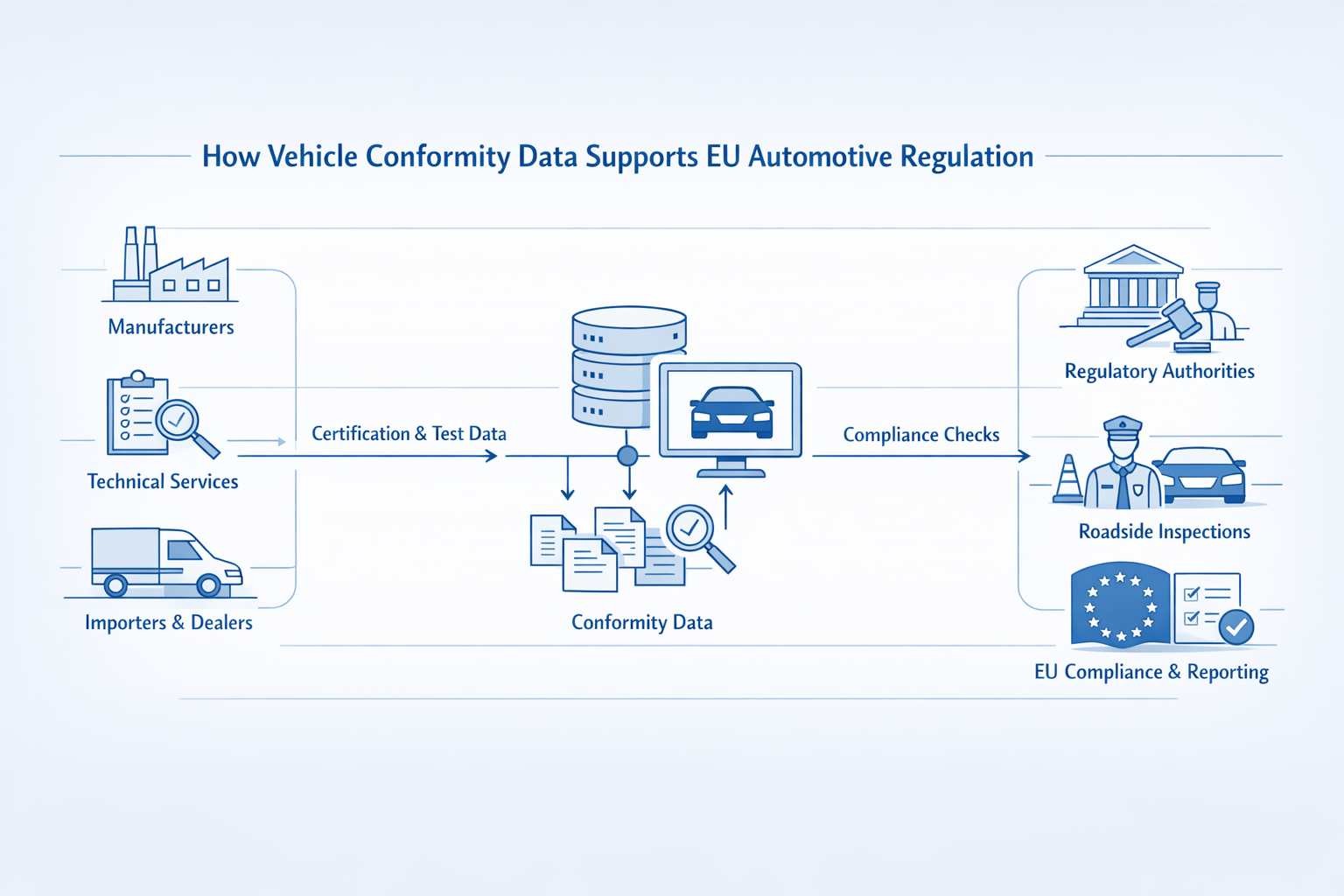
Vehicle conformity data is a critical element in the European automotive regulatory system. Authorities rely on this information to verify that vehicles meet the requirements established by European legislation before they can be placed on the market.
As automotive regulations continue to evolve, structured datasets describing vehicle characteristics have become increasingly important for managing regulatory compliance.
Vehicle conformity data represents the technical and regulatory characteristics of a vehicle. This information confirms that a vehicle corresponds to an approved vehicle type and satisfies the regulatory framework under which it was evaluated.
Authorities use this data when verifying compliance during approval, registration, and oversight procedures.
Regulatory Verification Processes
Regulatory authorities must confirm that vehicles entering the European market comply with applicable safety and environmental standards. Conformity data provides the information necessary to perform these verifications.
Without reliable regulatory data, confirming vehicle compliance would become significantly more difficult.
Structured Data in Automotive Regulation
Modern automotive regulation increasingly relies on structured data formats that allow regulatory systems to process vehicle information automatically. Structured datasets help ensure that technical vehicle characteristics can be interpreted consistently across regulatory systems.
This approach improves the reliability and efficiency of regulatory workflows.
Cross-System Data Usage
Vehicle conformity data may be referenced by multiple regulatory systems, including approval authorities, vehicle registration systems, and oversight bodies. These systems rely on consistent regulatory datasets to perform their verification processes.
Maintaining reliable data across these systems is essential for effective compliance management.
Vehicle regulatory datasets often contain numerous interconnected parameters. These parameters must remain consistent with technical documentation and regulatory definitions.
Managing these datasets can become complex when multiple data sources contribute to the final representation of vehicle information.
The Importance of Accurate Regulatory Data
Accurate regulatory data helps ensure that compliance processes operate reliably. When vehicle conformity information remains consistent and well-governed, authorities can verify regulatory requirements more efficiently.
This reliability is essential for maintaining trust in the automotive regulatory framework.
Frequently Asked Questions
Vehicle conformity data represents the technical characteristics and regulatory information used to verify that a vehicle complies with approval requirements.
Why is structured data used in regulation?
Structured datasets allow regulatory systems to process vehicle information consistently and efficiently.
Manufacturers, regulatory authorities, and vehicle registration systems may all rely on conformity data during compliance processes.