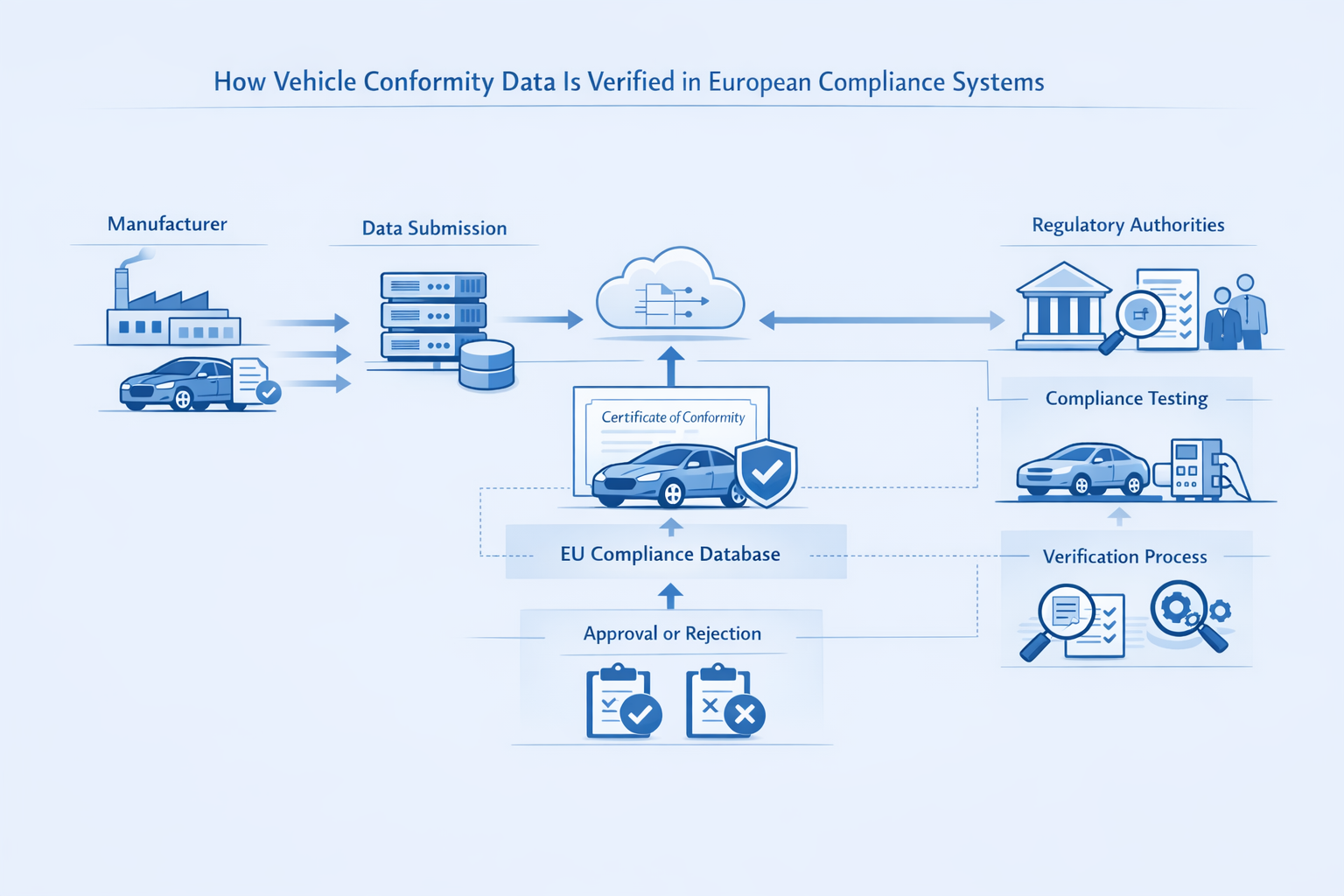
Vehicle conformity verification is a fundamental part of the European automotive regulatory framework. Authorities must confirm that vehicles correspond to approved specifications before they can be registered or operated within the European Union.
This verification process depends heavily on accurate regulatory datasets describing the vehicle and its technical characteristics.
Conformity verification ensures that a vehicle matches the characteristics defined during the vehicle type approval process. These characteristics include technical specifications, manufacturer references, and regulatory approval information.
Authorities rely on this information to confirm that vehicles comply with the applicable regulatory framework.
Sources of Vehicle Compliance Data
Vehicle conformity data may originate from several sources including engineering documentation, regulatory approval records, and manufacturing information. These sources collectively describe the approved configuration of the vehicle.
Maintaining consistency between these sources is essential for reliable verification processes.
Digital Verification Systems
Modern regulatory systems increasingly rely on digital data verification processes. Structured datasets allow systems to automatically evaluate vehicle characteristics and identify potential inconsistencies.
This digital approach helps regulatory authorities manage complex vehicle datasets more efficiently.
Challenges in Compliance Verification
Vehicle regulatory data often contains many interconnected parameters. When these parameters originate from different sources, maintaining consistency across the dataset becomes more difficult.
Ensuring reliable verification therefore requires careful data governance and regulatory expertise.
The Importance of Reliable Regulatory Data
Accurate vehicle datasets help ensure that compliance verification processes operate efficiently. Reliable regulatory data allows authorities to confirm vehicle conformity without unnecessary delays.
This reliability helps maintain confidence in the automotive regulatory system.
Frequently Asked Questions
It is the process used by regulatory authorities to confirm that a vehicle matches the approved technical specifications.
Why is structured vehicle data important?
Structured datasets allow regulatory systems to evaluate vehicle information more efficiently.
Regulatory authorities and approval bodies typically perform verification processes.