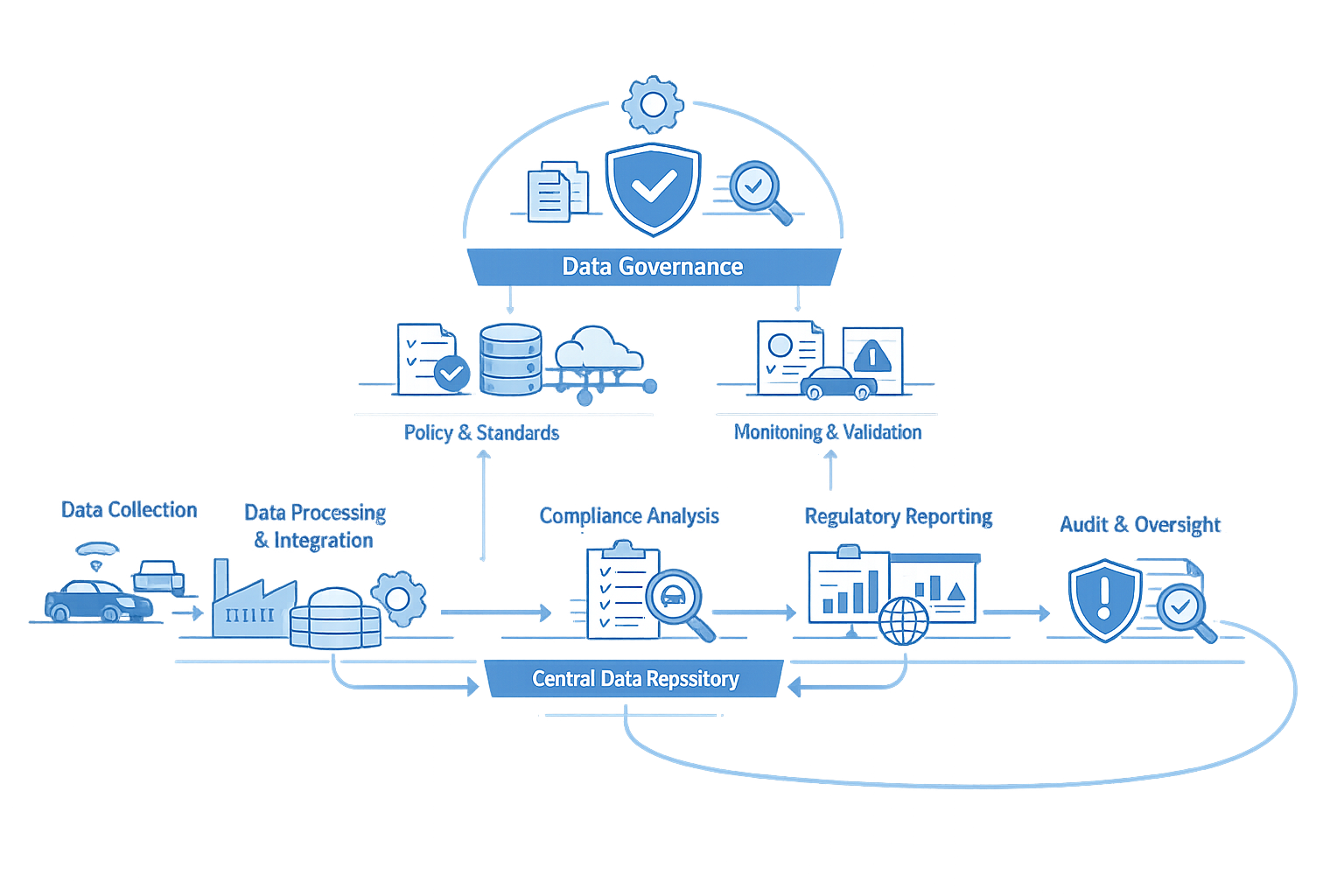
Why Automotive Regulatory Data Requires Strong Data Governance
Automotive regulatory systems depend heavily on technical datasets describing the characteristics of vehicles. These datasets are used during vehicle approval, compliance verification, and registration processes. As regulatory frameworks become more data-driven, managing these datasets effectively becomes increasingly important.
Strong data governance helps ensure that regulatory vehicle information remains accurate, consistent, and reliable.
The Role of Regulatory Data in Automotive Compliance
Regulatory vehicle data describes the approved technical characteristics of a vehicle. This information may include identification data, manufacturer references, approval identifiers, and technical parameters associated with the vehicle.
Authorities rely on this information when evaluating whether vehicles comply with regulatory requirements.
Challenges of Managing Regulatory Datasets
Automotive regulatory datasets can contain a large number of technical parameters. These parameters may originate from engineering documentation, approval records, and manufacturing systems.
Ensuring that these sources remain aligned requires careful coordination.
Why Data Governance Is Important
Data governance refers to the processes used to manage regulatory information across systems and organizations. These processes help ensure that technical datasets remain accurate and consistent over time.
Effective governance helps prevent inconsistencies that could affect compliance verification.
Consistency Across Regulatory Systems
Vehicle regulatory data may be referenced by multiple authorities and systems. Maintaining consistent datasets across these systems is essential for reliable regulatory operations.
Without strong governance processes, inconsistencies may arise that complicate verification procedures.
The Role of Compliance Infrastructure
Organizations responsible for regulatory data often implement compliance infrastructure to support governance processes. These systems help manage datasets and maintain alignment between documentation and structured data.
This infrastructure helps ensure that compliance processes remain reliable and efficient.
Frequently Asked Questions
What is regulatory data governance?
It refers to processes used to manage and maintain regulatory datasets describing vehicle characteristics.
Why is governance necessary?
Governance helps ensure that regulatory datasets remain accurate and consistent across systems.
Who manages regulatory data governance?
Manufacturers, regulatory authorities, and compliance specialists may participate in managing regulatory data governance.